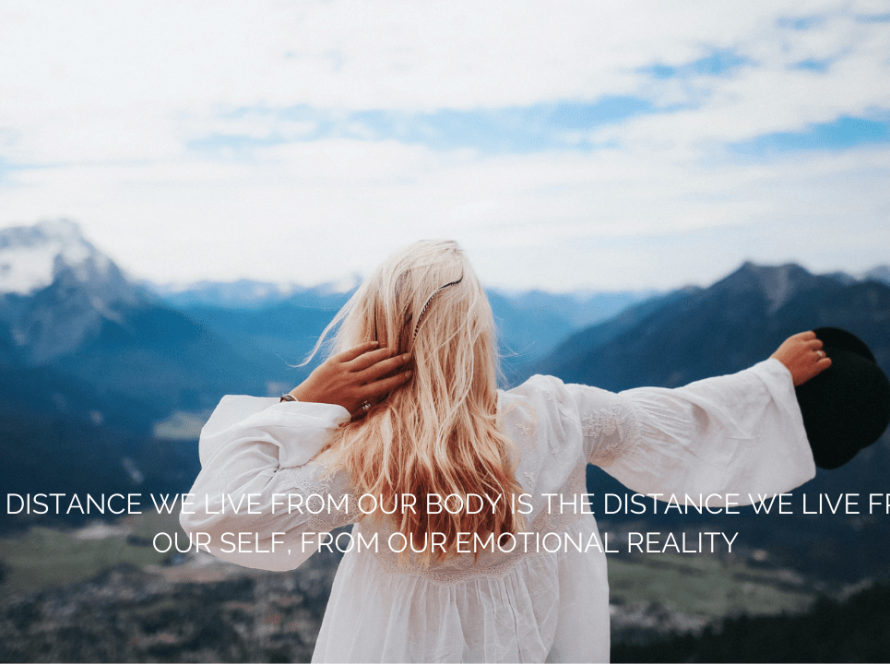
There is a particular kind of breath I keep witnessing lately.
It arrives not at the beginning of a conversation, but after a long detour. After the qualifiers. After the careful language. After the internal negotiations about what is safe to say, what might rupture the field, what might change how we are held. And then, sometimes, a sentence lands. Plain. Unadorned. True. The body responds before the mind can interfere. A deep inhale. A soft exhale. A nod. A quiet yes.
That breath has been my teacher these days.
I notice it as I sit with change-makers holding the weight of systems that ask them to care endlessly without ever touching the root. I notice it with executives in pharma and FMCG, fluent in strategy yet starved of places where they can speak without armour. I notice it in my clinical practice, where words often hover at the edge of the mouth for years before daring to enter the room. And I notice it in myself, again and again, when I finally stop circling and name what is actually happening.
Naming is not a linguistic act.
It is a somatic event.
When we name, something loosens. Muscles soften. Attention gathers. Life force, previously locked into vigilance, becomes available again. Before that moment, I see how much energy is being spent on protecting, defending, guarding. On rehearsing sentences that are never spoken. On managing impressions. On staying “appropriate.” The body knows the cost even when the mind justifies it.
David Whyte writes that courage often appears not as bravado but as a small, precise act. Often, that act is simply telling the truth we are already carrying.
What stops us is rarely a lack of insight. Most people know what is true long before they say it. What gets in the way is the long apprenticeship many of us have served to silence.
And this is important to say: silence often begins as an act of love.
We stay quiet to preserve the relationship.
To protect the bond.
To avoid shattering intimacy.
To keep proximity.
We tell ourselves we are being kind. Loyal. Considerate. We tell ourselves that naming would be too much, too disruptive, too costly. And in many cases, that silence was once adaptive. It kept us belonging. It kept us safe. It kept us connected.
But over time, something turns.
The silence that was meant to preserve intimacy begins to erode it. The bond thins. The relationship becomes brittle, polite, managed. We lose the very closeness we were trying to protect. What we silence does not disappear. It waits. And it waits for proximity.
Rilke reminds us that what is most unsayable in us often longs most to be spoken. What got silenced is not asking for resolution. It is asking for contact. For closeness. For touch. For presence.
Sometimes I ask a simple question:
Who benefits from your silence?
The room often goes very still.
Tears appear, or a long pause opens, heavy and precise, as if someone has reached into an archive they have not touched in decades. You can almost feel the nervous system scrolling back through memory, locating the moment when speaking became dangerous, or useless, or too costly. A family table. A workplace. A political climate. A relationship where truth was punished, ignored, or weaponised.
Hafez once wrote that fear is the cheapest room in the house, and many of us have been living there for a very long time.
Silence, at some point, was a strategy. But over time it becomes something else. It turns into complicity with a violence that no longer needs a perpetrator. We begin to enforce it ourselves.
This is the part that hurts to see. Not because it is dramatic, but because it is so ordinary. We have become accomplices to our own diminishment. Our silence has cost us peace. It has cost us intimacy. It has cost us access to our own vitality. We burn extraordinary amounts of energy managing what cannot be spoken, energy that could have been used for living, connecting, creating, loving.
Rumi writes, “Why are you so busy with this or that or good or bad; pay attention to how things blend.”
What is unsaid does not stay separate. It blends into everything.
And still, compassion is needed here. Because in each of us there is a part that has never been given permission to be as it is. A part that learned early that its truth was inconvenient, disruptive, or unsafe. These parts do not disappear because we read the right books or adopt the right language. They wait for conditions. They wait for relational safety. They wait for a signal that naming will not lead to exile.
This is where the question of access matters.
Not everyone has the means or the cultural permission to seek private spaces of reflection and repair. Therapy, coaching, even the language of “processing” is not evenly distributed. I am acutely aware of this when I think about growing up in Algeria. We did not have therapists or coaches in the way they exist now. But we had something else. We had people. Kitchens. Courtyards. Long visits. Arguments. Lamentations. Witnessing that was sometimes clumsy, sometimes harmful, but rarely absent. Life met life, out loud.
Today, much of that communal fabric has thinned. Support has been privatised, professionalised, and in many cases reserved for those with time, money, and cultural fluency. If you are lucky, you have a friend who can listen without fixing, advising, or centring themselves. If you are very lucky, you find spaces where your truth can be spoken and metabolised rather than merely aired.
This is why naming matters beyond the personal.
When we name, something is freed, not only inside us but in the field between us. Awareness expands. Possibility appears. Naming interrupts the trance of going through the motions of life and returns us to participation in it. It allows complexity to surface without immediately being solved. It creates conditions where we do not have to navigate alone what was never meant to be carried individually.
Rilke offers a quiet instruction here: to love the questions themselves, to let them live in the open rather than rush them toward answers.
I am grateful, profoundly, for the places and people that have held me while I learned to name. Not perfectly. Not heroically. But enough to feel the difference between a life guarded and a life in contact.
And I find myself wondering if naming is less about courage and more about intimacy. Less about having the right words and more about allowing what has been kept at a distance to come near. So much of what we silence is not trying to disrupt our lives, but to re-enter them. It is asking for contact, for relational space, for the simple permission to exist without being managed or hidden.
If there is a quiet ache beneath so many of our conversations right now, it may be this: that we are longing to be met where we actually are, not where we have learned to stand. Naming does not guarantee safety or agreement, but it does restore aliveness. It allows breath to return. It lets life meet life again.
And perhaps that is enough for now.
To stay close to what is true.
To notice where silence once protected love, and where love might now ask for speech.
To remain in the conversation, not as an answer, but as a living, breathing presence.